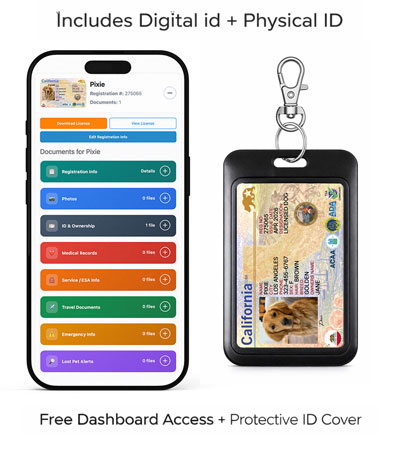
Wood County Dog Registration Information
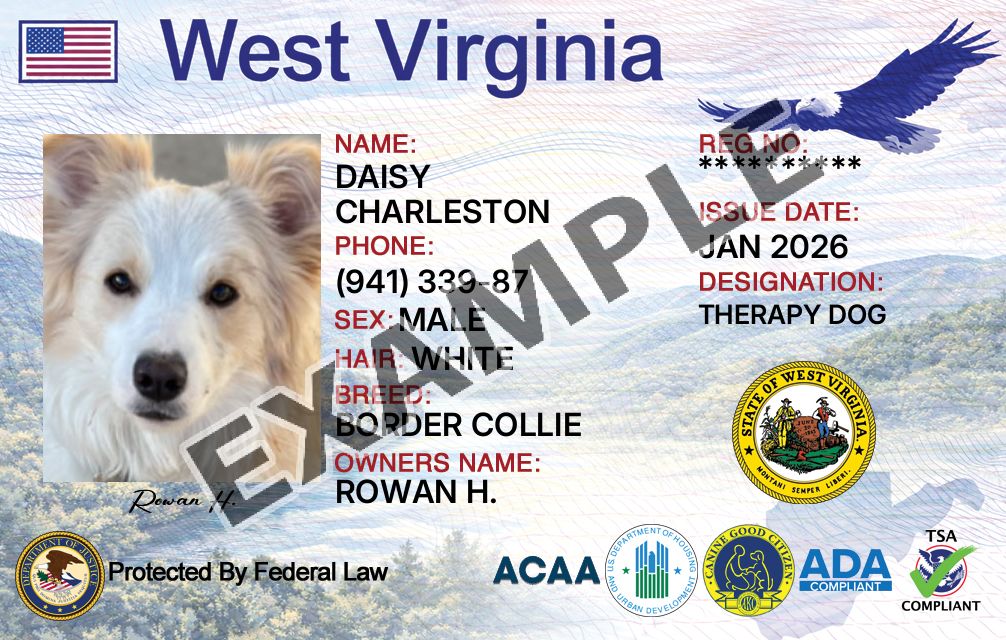
Service Dogs and Emotional Support Animals in Wood, West Virginia
If you’re searching where do I register my dog in Wood County, West Virginia for my service dog or emotional support dog, the key thing to know is that service dog status and emotional support animal (ESA) status are not the same as a dog license in Wood County, West Virginia.
In Wood County, dog licensing is handled locally—typically through county tax/licensing channels and supported by local animal welfare offices. Even if your dog is a service dog or an ESA, you may still need to comply with local rules such as rabies vaccination and, in many cases, a local license or tag requirement.
Where to Register or License Your Dog in Wood County, West Virginia
Because dog licensing is often handled at the county or city level, below are several official or locally responsible offices commonly involved with dog tags, licensing, animal control coordination, or rabies-related guidance in Wood County. If you’re trying to figure out where to register a dog in Wood County, West Virginia, start with the county tax/licensing office and then confirm any city-specific rules if you live inside Parkersburg, Vienna, or Williamstown.
Wood County Sheriff’s Tax Office (Judge Black Annex)
| Address | 319 Market St. |
|---|---|
| City/State/ZIP | Parkersburg, WV 26101 |
| Phone | (304) 424-1910 |
| Office hours | Lobby: 8:30am–4:30pm (Mon–Fri, closed holidays); Drive Thru: 8:30am–4:00pm |
This is a primary starting point for county taxes and licensing-related questions in Wood County, including guidance published by the county regarding dog tags.
Wood County Assessor’s Office (Wood County Courthouse)
| Address | 1 Court Square |
|---|---|
| City/State/ZIP | Parkersburg, WV 26101 |
| Phone | (304) 424-1875 |
| sedelen@woodcountywv.com |
The Assessor’s Office is referenced locally for licensing-related lookups (for example, locating an owner from a license tag number) and can help direct you to the correct licensing workflow.
Humane Society of Parkersburg (Local Dog License Sales Location)
| Address | 530 29th Street |
|---|---|
| City/State/ZIP | Parkersburg, WV 26101 |
| Phone | (304) 422-5541 |
| Office hours | Mon–Fri: 10:30am–5:00pm; Sat: 10:30am–4:00pm |
Published local guidance states Wood County dog licenses may be purchased at the shelter or at the Judge Black Annex.
Overview of Dog Licensing in Wood County, West Virginia
What “licensing” usually means in Wood County
In Wood County, “registering your dog” typically means obtaining a local dog license/tag (sometimes described as a dog tax/tag). Local guidance indicates that dogs that meet the local threshold (commonly based on age) are expected to be licensed and wear a tag. This matters for identification if your dog is lost, and it supports local enforcement and animal services.
Who enforces dog licensing and what happens if you don’t license
Under West Virginia law, counties have authority and duties around assessing and collecting dog-related taxes/fees, and delinquent dog tax can be referred to a county dog warden or, if none exists, to the sheriff for impound procedures described in state law. In practice, day-to-day support for animal control dog license Wood County, West Virginia questions is often handled through county offices and local partner organizations that sell tags.
Rabies vaccination: a core requirement tied to licensing and public health
Rabies prevention is handled through public health systems (often county health departments and veterinarians), and rabies documentation is commonly requested when licensing a dog. If your dog bites someone or is exposed to a potentially rabid animal, local and state public health guidance may require reporting, quarantine, or other steps depending on the situation.
How Dog Licensing Works Locally in Wood County, West Virginia
Step-by-step: where to start
- Confirm which jurisdiction you’re in. Tell the office whether you live in Parkersburg, Vienna, Williamstown, or outside city limits. This can affect fees and where you obtain your tag.
- Contact the Sheriff’s Tax Office (Judge Black Annex) or the Assessor’s Office. These are key county points of contact for taxes/licenses and local direction.
- Ask whether you can obtain a tag through a local partner office. Local guidance indicates the Humane Society of Parkersburg may sell dog licenses/tags as a local point of service.
- Bring the required documents. Most owners should expect to show rabies vaccination proof and personal identification, and to pay the applicable fee.
- Keep your tag and records current. Licensing commonly renews on an annual cycle and dogs are expected to wear the tag.
Local fees and renewal timing (example guidance)
Wood County-published guidance indicates that dog tag costs can vary by municipality (for example, one rate for Parkersburg/outside city limits and a different rate for Vienna/Williamstown), and that dog tags may be obtained by mail, through online personal property filing workflows, or by coming in-person to the office or the humane society. Because procedures can change, confirm current amounts, acceptable payment methods, and renewal windows when you call.
What to do if your dog is a service dog or emotional support animal
If you’re asking where do I register my dog in Wood County, West Virginia for my service dog or emotional support dog, it’s important to separate two tracks:
- Local licensing track: You may still need a regular dog license in Wood County, West Virginia (tag/registration) like any other dog.
- Legal status track: Service dog status (disability law) and ESA status (housing-related accommodation) are not created by buying a county dog tag.
Quick clarity: “Registration” vs. “Certification”
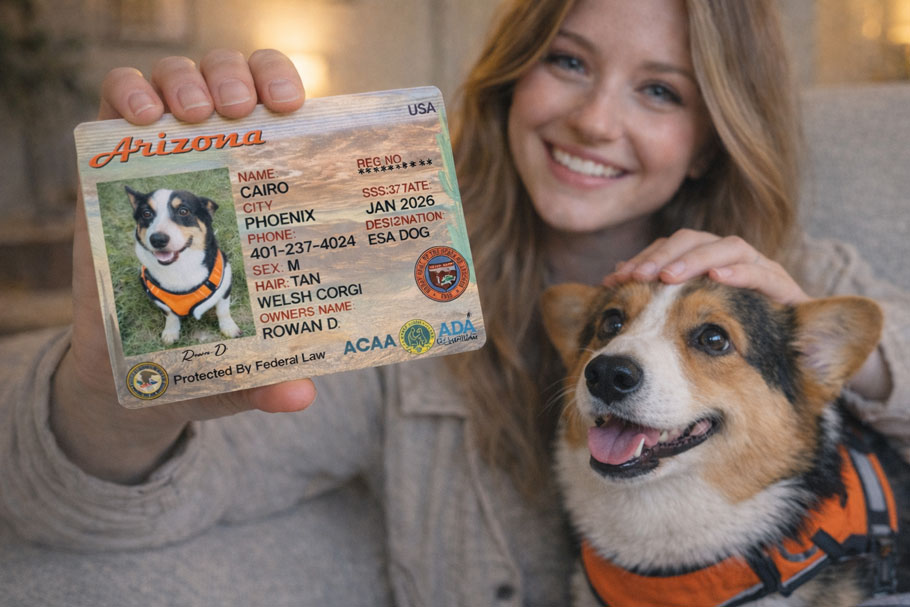
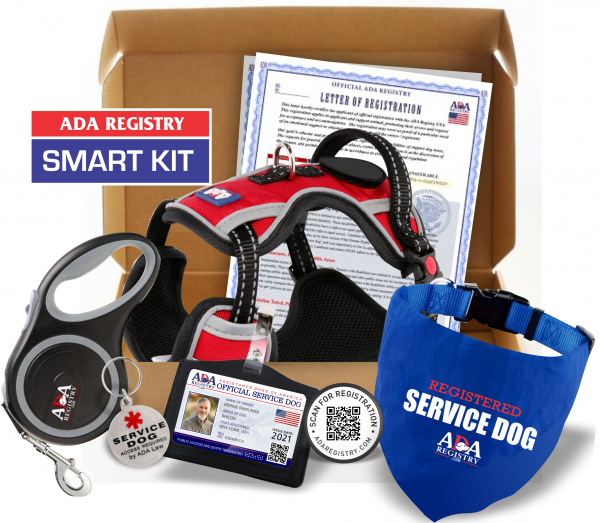
You may see websites offering “service dog registration” or “ESA registration.” Those are not the same as local government licensing, and they are usually not required by law to have a legitimate service animal or ESA accommodation. For local compliance in Wood County, focus on the dog tag/license process and rabies requirements first.
Service Dog Laws in Wood County, West Virginia
What makes a dog a service dog (in practical terms)
A service dog is generally a dog that is individually trained to do work or perform tasks for a person with a disability. The legal focus is on training and disability-related tasks, not on a county licensing label. You do not “turn a pet into a service dog” simply by obtaining a tag or a certificate.
Does a service dog need a local license?
In many communities, service dogs are still expected to comply with public health and animal control requirements that apply to dogs generally, including rabies vaccination and local licensing/tag rules. If you need a clear answer for your address in Wood County, ask the Sheriff’s Tax Office or Assessor’s Office whether any fee waivers or special handling exists for working service animals (and what documentation, if any, is needed locally).
What businesses or staff can (and can’t) ask
In public-access settings, the questions typically focus on whether the dog is required because of a disability and what work/tasks the dog is trained to perform. Staff generally should not demand medical records or require you to show a special “registration card” as a condition of access. Local dog licensing (tags) can still be helpful for identification, but it is not the defining proof of service dog status.
Emotional Support Animal Rules in Wood County, West Virginia
What an ESA is (and what it is not)
An emotional support animal (ESA) is generally an animal that provides comfort that may help with symptoms or effects of a disability, most commonly in the context of housing accommodations. ESAs are not the same as service dogs because they are not required to be task-trained for public access.
Does an ESA get public access rights like a service dog?
Typically, no. An ESA is not automatically permitted everywhere the public is allowed in the way a service dog may be. If you’re trying to avoid problems while out in public, it’s especially important not to rely on “ESA registration” paperwork as a substitute for service-dog task training or public-access rules.
Does an ESA still need local licensing and rabies vaccination?
Yes—an ESA is still a dog (or other animal) under local public health and animal control systems. If you’re wondering where to register a dog in Wood County, West Virginia for an ESA, the answer is the same as for any pet dog: follow local tag/licensing processes through the county and applicable municipal rules, and keep rabies vaccination current.
Frequently Asked Questions
Register A Dog In Other West Virginia Counties
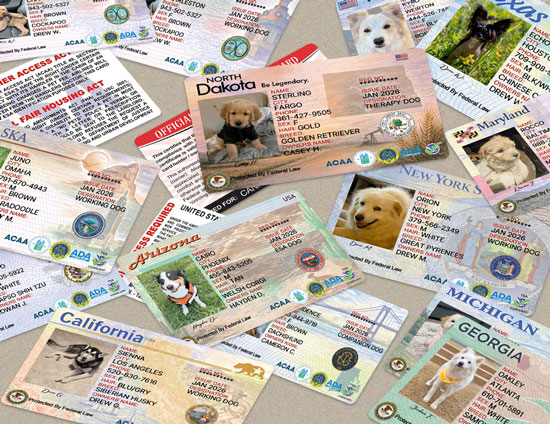
Select your county below to get started with your dog’s ID card. Requirements and license designs may vary by county, so choose your location to see the correct options and complete your pup’s registration.
- Barbour County Dog Registration
- Berkeley County Dog Registration
- Boone County Dog Registration
- Braxton County Dog Registration
- Brooke County Dog Registration
- Cabell County Dog Registration
- Calhoun County Dog Registration
- Clay County Dog Registration
- Doddridge County Dog Registration
- Fayette County Dog Registration
- Gilmer County Dog Registration
- Grant County Dog Registration
- Greenbrier County Dog Registration
- Hampshire County Dog Registration
- Hancock County Dog Registration
- Hardy County Dog Registration
- Harrison County Dog Registration
- Jackson County Dog Registration
- Jefferson County Dog Registration
- Kanawha County Dog Registration
- Lewis County Dog Registration
- Lincoln County Dog Registration
- Logan County Dog Registration
- Marion County Dog Registration
- Marshall County Dog Registration
- Mason County Dog Registration
- McDowell County Dog Registration
- Mercer County Dog Registration
- Mineral County Dog Registration
- Mingo County Dog Registration
- Monongalia County Dog Registration
- Monroe County Dog Registration
- Morgan County Dog Registration
- Nicholas County Dog Registration
- Ohio County Dog Registration
- Pendleton County Dog Registration
- Pleasants County Dog Registration
- Pocahontas County Dog Registration
- Preston County Dog Registration
- Putnam County Dog Registration
- Raleigh County Dog Registration
- Randolph County Dog Registration
- Ritchie County Dog Registration
- Roane County Dog Registration
- Summers County Dog Registration
- Taylor County Dog Registration
- Tucker County Dog Registration
- Tyler County Dog Registration
- Upshur County Dog Registration
- Wayne County Dog Registration
- Webster County Dog Registration
- Wetzel County Dog Registration
- Wirt County Dog Registration
- Wyoming County Dog Registration